
Faggruppen inviterer alle interesserte til webinar mandag 30. november kl. 15.00-16.00.
Join Zoom Meeting
https://NTNU.zoom.us/j/94716699620?pwd=8oJvTWiEP3a6R7bKcPG0NmxEw8p6tH.1&from=addon
Meeting ID: 947 1669 9620
Passcode: 529968
Guillermo Restrepo vil foredra om «Unfolding of the periodic system: how the history of material chemical discoveries contributed to the emergence of the periodic system and shaped its current form»
Guillermo Restrepo
Institute for Studies of Science (ISoS), Bielefeld University
Bielefeld, Germany; Max Planck Institute for Mathematics in the Sciences
Leipzig, Germany
Unfolding of the periodic system: how the history of material chemical discoveries contributed to the emergence of the periodic system and shaped its current form
The periodic system is one of chemistry’s most enduring intellectual achievements—a compact object that generations of chemists have learned, used, and taken for granted. But the periodic system we know today was not inevitable. It emerged through a complex interplay between the discovery of chemical substances, its associated knowledge and the social, economic, and political forces that shaped chemical practice over more than two centuries.
In this talk, I will present results from a large-scale computational analysis of the chemical space—the collection of all substances reported in the chemical literature since 1800. Drawing on data from Reaxys, a comprehensive database of chemical compounds and reactions, I will show how the growth of the chemical space has influenced the structure and evolution of the periodic system in ways that are often overlooked.
Several questions will be addressed. For example, to what extent the different competing sets of atomic weights of the nineteenth century allowed for the emergence of the system in the 1860s? Why does the position of hydrogen in the periodic system remain a matter of debate? The former requires «seeing» the chemical space and its eventual periodic systems according to the competing sets of atomic weights. The second entails analysing the diversity of the chemical space over history. I will also discuss how the stability of certain groups of similar elements in the periodic system reflects not only intrinsic chemical properties but also the shifting priorities of chemical research—from the early inorganic chemistry discoveries, the emergence of organic chemistry as a powerful sector of chemical research and industry, to the chemistry driven by the Manhattan Project and the trends of contemporary chemical practice.
Finally, I will address the question about the future of the periodic system, where fundamental changes of its structure are unlikely. This points to a remarkable stability—a kind of final shape—that the periodic system has achieved, even as the chemical space allowing for it continues to grow.
The talk will offer a fresh perspective on a familiar object, revealing the hidden historical dynamics that have shaped the periodic system and continue to influence the direction of chemical research today.
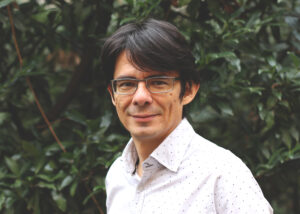
Guillermo Restrepo is a Senior Researcher at the Institute for Studies of Science (ISoS), Bielefeld University, and at the Max Planck Institute for the Mathematics in the Sciences, Leipzig. His research focuses on the computational history of chemistry, particularly the application of mathematical and computational methods to study the evolution of chemical knowledge, the emergence of scientific concepts like the periodic system, and the geopolitical dimensions of chemical discovery. His work bridges history of science, digital humanities, and mathematical and computational methods to explore how large-scale data analysis can illuminate historical patterns in chemistry.